A private jet interior is far more flexible than most people expect. Depending on the aircraft category, the cabin can range from a compact lounge with club seating to a multi-zone layout with a dining area, a private bedroom and an en-suite bathroom.
The layout is determined by the size of the aircraft, the number of passengers it is designed to carry and the choices made by the owner or operator. Light and midsize jets focus on efficient seating and a compact galley, while large-cabin and ultra-long-range jets offer separate living areas, sleeping accommodation and more extensive amenities.
This guide explains how private jet cabins are typically arranged, what bedrooms and bathrooms look like on board, and which custom options are available.
What does a typical private jet interior look like?
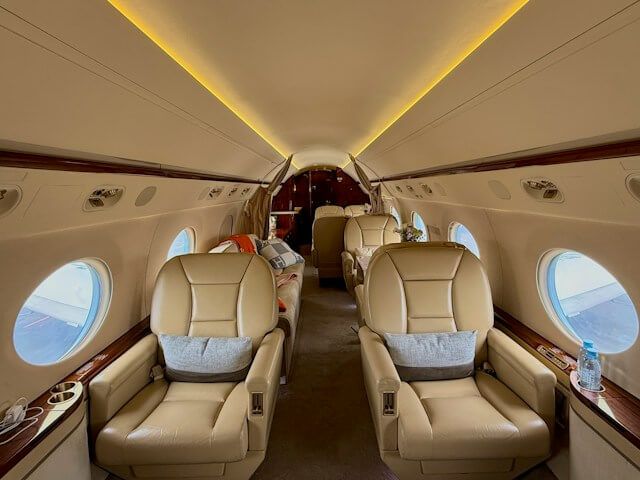
Most business jet cabins follow a similar basic concept: a forward area with the galley or entry, a main passenger cabin, and an aft lavatory with a baggage compartment. Within this structure, the seating arrangement can vary considerably.
Club seating: pairs of seats that face each other, usually with a table between them, ideal for meetings and conversations.
Divan or sofa: a side-facing seat that can seat two or three passengers and, in some aircraft, converts into a bed.
Single seats: individual leather seats that swivel and recline, often with a fold-out table.
Galley: a compact kitchen area with storage and equipment for serving drinks and meals.
The number of seats differs by category. As a rough guide, light jets typically carry around six to eight passengers, midsize and super-midsize jets around eight to ten, and large-cabin jets can accommodate considerably more depending on the configuration.
How do cabin layouts differ by aircraft category?
The aircraft category has the largest influence on how much space is available. Smaller cabins offer fewer layout options, while larger aircraft can be divided into several zones.
Light and midsize jets
These aircraft usually have a single cabin zone with club seating and a divan. Standing room in light jets is limited, and the lavatory is often compact. They are well suited to shorter trips with a small group.
Super-midsize jets
Super-midsize aircraft offer more cabin width and height and typically include an enclosed lavatory and a more developed galley. Many of them allow passengers to stand upright in the cabin.
Large-cabin and ultra-long-range jets
Large-cabin jets can include two to four distinct living areas, for example a lounge, a dining or conference area and a private suite. Aircraft such as the Gulfstream G700 and the Bombardier Global 8000 are designed with several living spaces, according to their manufacturers.
VIP airliners
Airliner-based VIP aircraft, such as those from the Airbus ACJ and Boeing Business Jets families, offer the most space. Their interiors are completed individually and can include multiple lounges, bedrooms, offices and showers.
Do private jets have bedrooms?
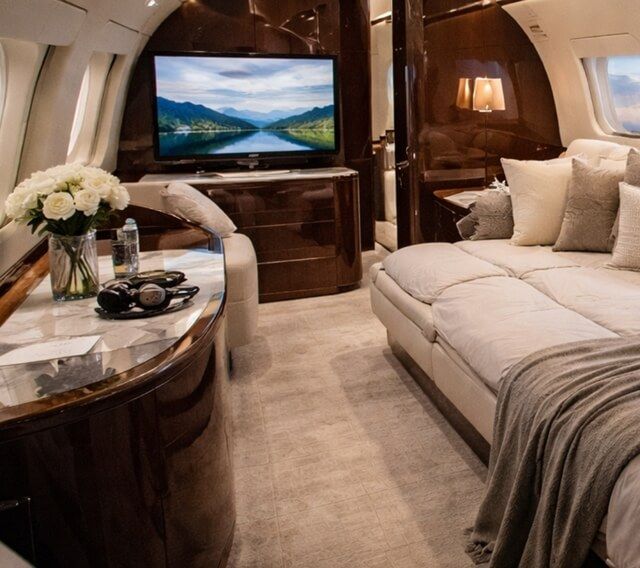
Some do. A dedicated bedroom is typically found only on the largest aircraft. In ultra-long-range jets, a private suite at the rear of the cabin can include a full-size bed, storage space and direct access to the bathroom.
In smaller aircraft, sleeping is possible but more limited. Divans and reclining seats can often be arranged to provide a flat or near-flat sleeping surface, which is usually sufficient for overnight flights with a small group.
Passengers who plan to sleep on board should consider the following points:
the number of passengers who need a flat sleeping surface,
whether the layout includes a separate private suite or only convertible seating,
the length of the flight and the time zone difference,
the cabin altitude and noise level, which can affect rest.
What are private jet bathrooms like?
Nearly all business jets with a standing cabin offer an enclosed lavatory with a toilet and a washbasin. In light jets, the toilet can be a simple compartment that is separated from the cabin by a curtain or a door, which is worth checking when privacy is important.
On larger aircraft, the lavatory is usually a fully enclosed room with a door, a vanity, storage and in some cases a window. Some of the largest aircraft and VIP airliners can be configured with a shower, which is particularly appreciated on very long flights.
Because bathroom features depend on the individual aircraft, it is worth asking about the exact layout when booking a specific flight.
Which custom options are available?
Aircraft owners can personalize the cabin extensively when ordering a new jet or refurbishing an existing one. Charter passengers generally cannot change the interior, but they benefit from the choices made by the owner and the operator.
Materials and finishes: leather and fabric, wood veneers, stone, metal accents and custom carpets.
Seating configuration: the number and position of seats, divans and tables.
Cabin management systems: control of lighting, temperature, entertainment and window shades from a tablet or panel.
Connectivity: in-flight Wi-Fi, streaming and video calls.
Galley equipment: ovens, espresso machines, refrigeration and storage solutions.
Lighting and atmosphere: adaptive lighting designed to support rest and reduce fatigue.
Every modification must meet weight and safety requirements, which is why interior design on aircraft is a specialized discipline that is closely coordinated with the manufacturer and the completion center.
What matters most when choosing a cabin?
The best interior depends on the purpose of the trip rather than on the number of amenities. A business team that wants to work during the flight has different needs from a family with children or a group traveling to a leisure destination.
Passenger numbers: make sure there are enough seats and enough space for luggage.
Flight duration: longer flights benefit from larger cabins, a flat sleeping surface and a full galley.
Privacy: a separate area or an enclosed lavatory may be important for some groups.
Cabin height and width: comfort improves when passengers can stand upright and move around.
Connectivity and catering: relevant for business travelers and longer routes.
How JetApp helps you choose the right cabin
JetApp helps passengers compare available aircraft for a planned route and find a cabin that matches their requirements. The selection can take into account passenger numbers, range, cabin size and the amenities that matter for the trip.
Since interior layouts can differ even between aircraft of the same type, specific questions about seating, sleeping accommodation or bathroom facilities can be clarified before booking.
Conclusion: What does a private jet interior offer?
A private jet interior can be anything from a compact lounge with club seating to a multi-room suite with a bedroom and a bathroom. The larger the aircraft, the more layout options are available.
For charter passengers, the key is to match the cabin to the trip: seating and galley for short flights, and sleeping accommodation and more living space for long-haul journeys.